Thinking about buying a SoHo loft and making it your own? That vision is exciting, but renovation in SoHo usually comes with more moving parts than buyers expect. Between landmark rules, city filings, building approvals, and the realities of older loft buildings, the process can affect your budget, timeline, and even what design changes are possible. Here’s what you should know before you close, so you can plan with confidence. Let’s dive in.
Why SoHo loft renovations feel different
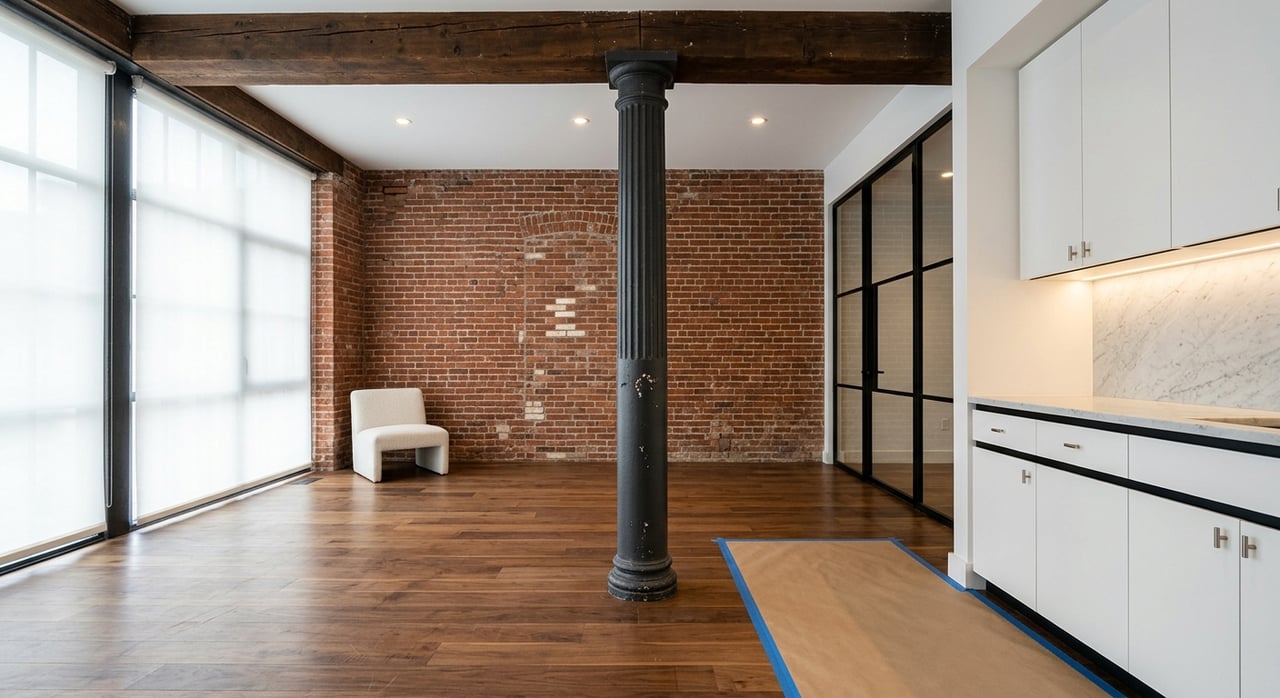
SoHo lofts were not built like typical apartments. Much of the neighborhood’s housing stock grew out of post Civil War store-and-loft buildings originally used for wholesale and manufacturing uses, which helps explain the high ceilings, large windows, open floor plans, and exposed structural elements that buyers love today.
That industrial scale is part of the appeal, but it also shapes the renovation process. You are often starting with a broad, open shell rather than a conventional apartment layout, so projects tend to focus on reworking bedrooms, bathrooms, kitchens, circulation, and storage instead of simply swapping finishes.
It is also important to know that SoHo is not one uniform building type. The historic district includes cast-iron-fronted buildings as well as many masonry buildings with similar loft proportions, which means renovation constraints can vary from one property to another.
Landmark status can shape your plans
In SoHo, one of the first questions to ask is whether the building is landmarked and how your renovation scope interacts with that status. Compared with newer downtown condos, SoHo lofts are more likely to involve landmark-related review for exterior or visible building elements.
If your work is fully interior, landmark review may not always be part of the process. But if the project requires a DOB permit or affects the exterior through items like HVAC louvers or vents, LPC review can also come into play.
For buyers, this matters most when you are planning changes that seem simple at first glance. Window replacement, façade-facing work, or mechanical penetrations can trigger a very different approval path than basic cosmetic updates.
What usually does not need landmark approval
LPC says ordinary repairs and maintenance generally do not require a permit. Examples include replacing broken window glass, repainting in the same color, and caulking around windows and doors.
That distinction is helpful because not every exterior-related task is treated like a true alteration. Maintenance is one thing, but replacement or visible changes are another.
What often raises review questions
If you are considering a larger renovation, these are common triggers to flag early:
- Window replacement or exterior window changes
- HVAC louvers, vents, or other exterior penetrations
- Façade-related work
- Interior changes that require DOB permits
- Structural or load-bearing modifications
LPC notes that most permit approvals are handled at staff level, with 95% issued without going to a public hearing. That is reassuring, but it still means buyers should assume review time is part of the planning process when the scope touches regulated elements.
DOB permits are often part of the process
Most NYC construction requires DOB approval, and plans are generally filed by a New York State licensed PE or RA. For apartment renovations, many kitchen and bathroom projects require an ALT2 filing.
DOB specifically points to examples like adding a new bathroom, rerouting gas pipes and adding outlets, or moving a load-bearing wall. In a SoHo loft, those are not unusual upgrades, especially when buyers want to improve flow, add convenience, or create a better primary suite.
This is one reason loft renovations can become complex quickly. What starts as a design conversation often becomes a filing and approval conversation too.
Your building may have its own rules
City approvals are only part of the picture. Many co-ops and some condos require a building-specific alteration agreement before work begins.
In practice, that can mean your plans are reviewed by the building’s engineer, and the building may require review deposits, security deposits, contractor documentation, approval letters, and written consent before construction starts. Depending on the property, building rules can shape your project almost as much as city regulations do.
If you are buying in a co-op, this layer can be especially important. Some renovation timelines run longer in co-ops than condos because of the added review process and building restrictions.
Timeline expectations for a SoHo loft renovation
One of the biggest buyer mistakes is underestimating the pre-construction phase. Before any demolition or build-out starts, you may need design work, filings, permits, landmark review, building approval, and contractor coordination.
DOB service data shows Manhattan major alteration plan review averaging 9.3 business days on initial submission and 18.4 business days total including resubmissions. Minor alterations average 7.4 business days on initial review and 8.3 business days total. These are agency averages, not guarantees, but they show that city review alone can take days to weeks.
For full apartment projects, recent NYC renovation guides estimate pre-construction at roughly 3 to 6 months, depending on the building and scope. Construction itself commonly takes another 4 to 8 months, and some full co-op gut renovations can stretch to 9 to 16 months overall.
Where the most time usually goes
In many SoHo loft projects, delays are less about demolition and more about coordination. The longest stretch often happens before work begins.
Common timeline drivers include:
- Design revisions
- DOB filings and resubmissions
- LPC review when applicable
- Building alteration agreement review
- Contractor scheduling
- Material lead times
If you are buying with a move-in deadline in mind, this planning window matters. A SoHo loft can become extraordinary, but it rarely becomes turnkey overnight.
Budget ranges buyers should plan for
Renovation pricing in NYC varies widely, but current planning ranges offer a useful framework. Cosmetic work is often estimated at about $100 to $250 per square foot, full renovations at roughly $300 to $500 per square foot, and gut renovations at around $500 to $800+ per square foot.
In SoHo, many loft projects lean toward the higher end of those ranges. Older buildings, landmark-related review, and more careful façade, window, and mechanical coordination can all add complexity, time, and soft costs.
For room-level budgeting, recent NYC guides place mid-range kitchens around $50,000 to $80,000 and high-end kitchens around $100,000 to $150,000+. Standard bathrooms are often estimated at $35,000 to $50,000, while luxury bathrooms can reach $60,000 to $90,000+.
Do not forget soft costs
Buyers often focus on finishes and contractor bids, but soft costs can be a real part of the budget. Recent NYC renovation guidance cites roughly $5,000 to $30,000 for items such as alteration agreements, architectural plans, permits, special inspections, and insurance requirements.
That range matters in SoHo because approvals are often more layered than buyers first assume. If you are comparing one loft to another, lower purchase price does not always mean lower total project cost.
The smartest layout upgrades in a loft
A SoHo loft gives you volume and flexibility, but the best renovations usually respect both. In many cases, the most valuable changes are the ones that improve daily function while preserving openness and natural light.
That can include a more coherent bedroom layout, an added bathroom or powder room, better custom storage, and a kitchen that works naturally within the open plan. Loft design guidance also points to using glass and metal doors to preserve light and adding millwork without chopping up the apartment’s scale.
The goal is not to make a loft feel like a standard apartment. The goal is to make it work better while keeping the features that made you want a SoHo loft in the first place.
Due diligence before you buy
If renovation is part of your plan, the best time to investigate is before contract, not after closing. A few direct questions can help you avoid major surprises.
Ask for these items early:
- Confirmation of whether the building is landmarked
- The building’s alteration agreement
- Any prior renovation history for the unit
- Details on whether your intended scope affects façades, windows, HVAC penetrations, or load-bearing elements
These checks can help you understand approval risk, timeline pressure, and likely cost before you commit. For buyers in SoHo, that is not extra diligence. It is essential diligence.
What this means for SoHo buyers
Renovating a SoHo loft can be incredibly rewarding, but it works best when you go in with clear expectations. You are not just choosing finishes. You are evaluating a building, a regulatory path, a construction timeline, and a long-term layout strategy.
If you plan carefully, the payoff can be a home that feels tailored, functional, and true to the character of downtown loft living. The key is knowing which questions to ask before the romance of the space turns into renovation sticker shock.
When you are evaluating a SoHo loft with renovation potential, having local guidance can make the process far more efficient. Team DeFosset can help you identify the right opportunities, ask the right due diligence questions, and navigate the realities of buying in Lower Manhattan with more clarity.
FAQs
What makes renovating a SoHo loft different from renovating a newer condo?
- SoHo lofts often sit in older historic buildings with open industrial layouts, and projects may involve landmark review, DOB filings, and building-specific alteration rules that are less common in newer condos.
Does a SoHo loft renovation always need Landmark Preservation Commission approval?
- No. Ordinary repairs and maintenance generally do not need LPC permits, but exterior changes, window alterations, or interior work tied to DOB permits or exterior impacts can trigger LPC review.
Do kitchen and bathroom renovations in a SoHo loft need NYC permits?
- Many do. DOB says most apartment kitchen and bathroom projects require an ALT2 filing, especially when the scope includes items like a new bathroom, gas line changes, added outlets, or load-bearing work.
How long does a full SoHo loft renovation usually take?
- Full projects often involve 3 to 6 months of pre-construction planning and approvals, followed by about 4 to 8 months of construction, though some co-op gut renovations can take longer.
How much should buyers budget for a SoHo loft renovation?
- A common NYC planning range is about $100 to $250 per square foot for cosmetic work, $300 to $500 per square foot for full renovations, and $500 to $800+ per square foot for gut renovations, plus soft costs.
What should buyers review before purchasing a SoHo loft to renovate?
- Buyers should confirm landmark status, request the building’s alteration agreement, review prior renovation history, and ask whether the planned work affects windows, façades, HVAC penetrations, or load-bearing elements.