Your SoHo loft already has star power. The volume, the light, the cast-iron bones — it can all look incredible in person. But buyers make decisions through photos, video, and a compelling launch story long before they ever step inside. With the right staging and media plan, you can translate that drama into clicks, showings, and strong offers. Here is how to stage for scale, light, and lifestyle while navigating SoHo’s unique buildings and buyer expectations. Let’s dive in.
Why SoHo lofts need a plan
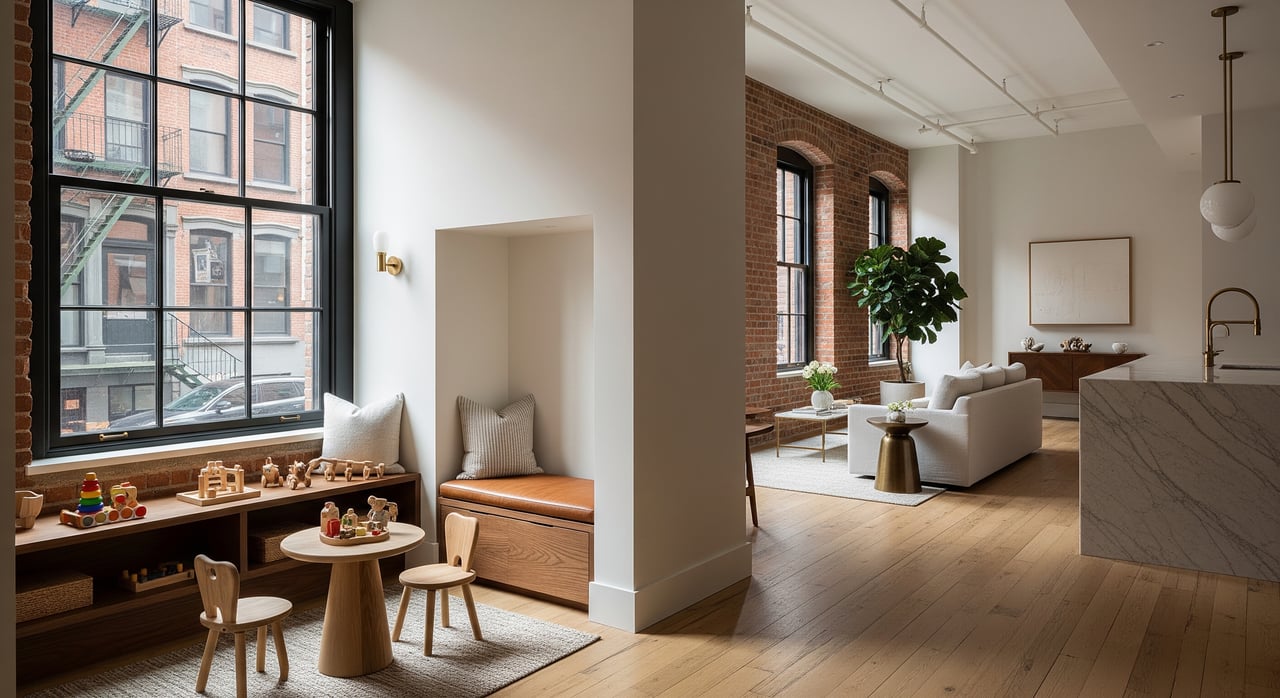
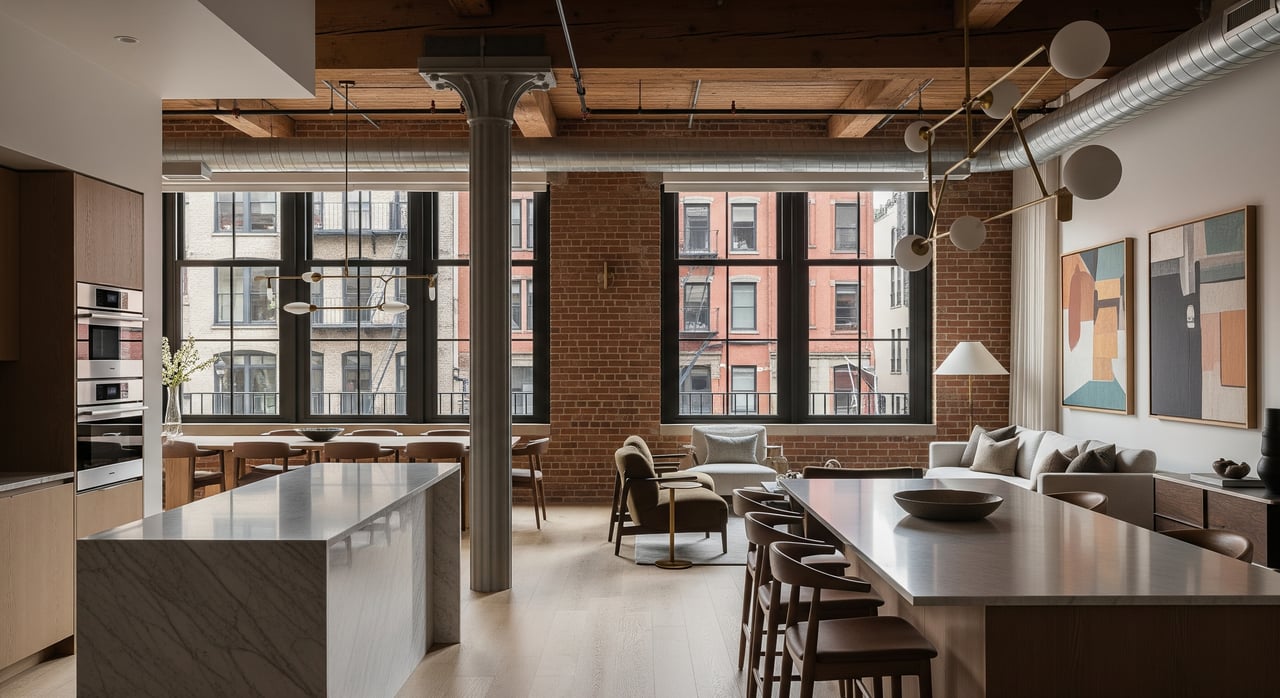
SoHo lofts are expansive, open, and often historic. High ceilings, tall factory windows, exposed columns, and original flooring create a signature look buyers love. That same openness can feel undefined on camera if it is not staged with intention. Your goal is to zone the space, spotlight the architecture, and craft a visual story that photographs beautifully and reads as lifestyle.
Zone open space without walls
Open plans are your strength when you define them. Focus on clarity and flow.
- Use low sofas, sectional islands, and benches to map living and conversation areas without blocking sightlines.
- Anchor each zone with a rug sized to the furniture footprint so spaces feel grounded.
- Create a clear path from entry to living, kitchen, and primary sleeping area. Aim for 36 inches of circulation where possible.
- Add tall bookcases or open shelving as vertical markers that do not block light.
Accentuate volume and light
Your ceiling height and windows are assets. Let them lead.
- Keep window sightlines unobstructed with low-profile or transparent pieces near glass.
- Layer lighting vertically: ambient overhead, task lamps, and a few adjustable accent lights to model depth in photos and film.
- Plan photo shoots within 2 to 3 hours of peak daylight for soft, even light. Capture golden-hour exteriors and twilight interiors for drama.
- Choose finishes that reflect and diffuse light. Light wood, pale stone, linen, and subtle metallic accents read crisp on camera.
Curate art and celebrate architecture
Large walls and tall ceilings need art with presence.
- Scale up. Fewer, larger pieces often work better than many small ones.
- Hang at gallery eye level, roughly 57 to 60 inches to the center, so art sits comfortably in frame.
- Use picture lights or directional track heads to reduce glare and add dimension.
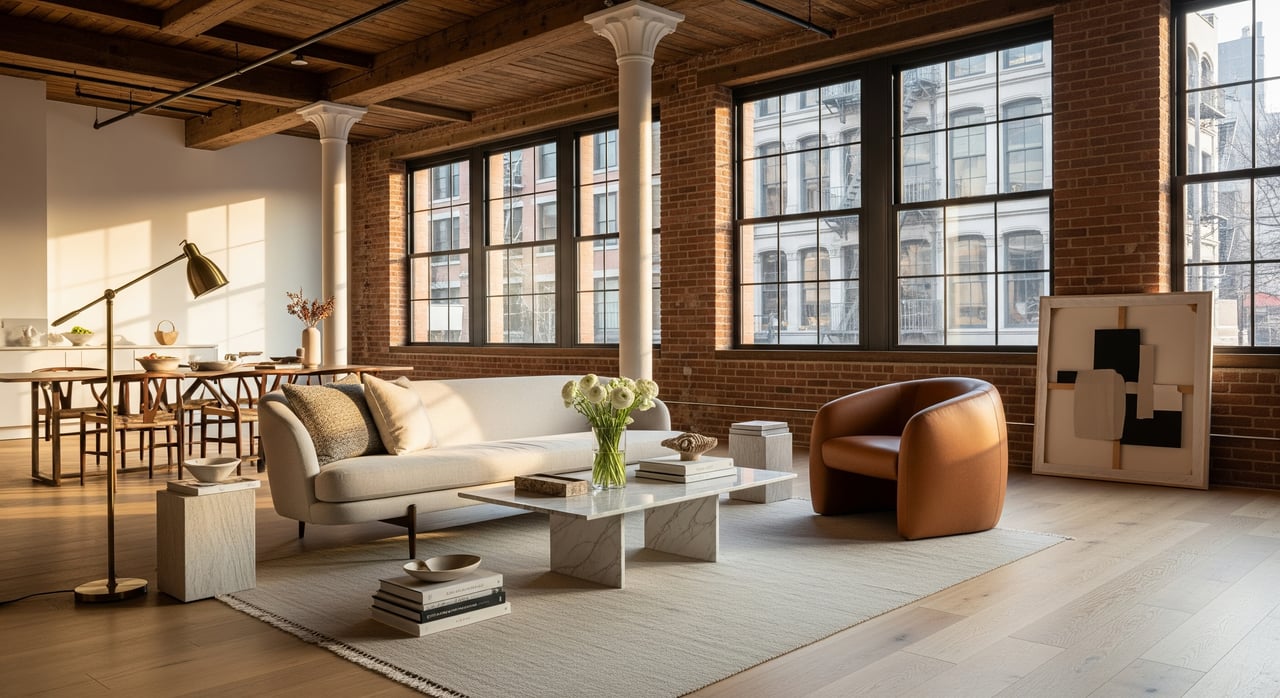
- Highlight the original details — exposed brick, cast-iron columns, beams, or moldings — as selling points, not backdrops to hide.
Use a neutral base with texture
A restrained palette broadens appeal and magnifies space.
- Lead with soft whites, warm grays, beige-ivory, or muted taupes to unify zones.
- Layer texture through linen, leather, plaster, and raw wood so the space feels warm but not busy.
- Add a few curated accents, like a deep jewel-toned vase or sculptural object, to punctuate the design.
- Repeat a material or tone across zones to create harmony in wide-angle shots.
Minimize personalization, maximize story
You want buyers to picture their life inside your loft.
- Remove most personal photos and highly specific memorabilia.
- Keep a few thoughtful design books and edited objects to suggest lifestyle without distraction.
- Define a simple, memorable narrative for marketing, like “gallery-ready living with original cast-iron columns and custom lighting.” This helps press and buyers remember your home.
Room-by-room staging checklist
Tailor these steps to your footprint and buyer profile, whether entertainer, collector, or pied-à-terre owner.
Entry and circulation
- Create a distinct arrival moment with a console, mirror, and a single art piece.
- Use a rug or subtle flooring shift to define transition into the great room.
- Keep pathways clear and generous for both touring and filming.
Great room and living
- Center seating on a large rug to make a social cluster that reads on camera.
- Let architecture lead. Use a column, fireplace, or window wall as the focal point rather than a TV.
- Layer lighting with tall floor lamps and a sculptural pendant to model height.
Kitchen and dining
- Set a dining table for two to six with simple, modern settings.
- Keep counters mostly clear. Style with a single vase, a bowl of citrus, or a neat stack of cookbooks.
- If your kitchen is compact, zone dining subtly to signal separation without blocking flow.
Sleeping area or primary suite
- If open to the great room, define a bedroom alcove with a low headboard, layered rugs, and an airy screen or open shelving.
- Make the bed the anchor. Crisp, neutral linens with one accent pillow or a tactile throw look luxurious on camera.
Bathrooms
- Bright, spotless, and uncluttered wins. Replace tired towels and hardware where needed.
- Refresh grout and caulk for a clean finish.
- Add a single vase or candle, not a countertop full of props.
Office or studio nook
- Stage a compact workstation with a slim desk and tidy shelving.
- Use warm task lighting to make the area feel purposeful and inviting in photos.
Storage and closets
- Buyers open closets. Pare down contents, switch to uniform hangers, and style shelves neatly.
- Clear visible storage to showcase usable volume.
Floors and surfaces
- Refinish or repair worn wide-plank floors if cost-effective. Clean and seal concrete for an elevated industrial look.
- Touch up paint throughout in a unified, neutral palette. Fresh paint can dramatically improve photography.
Photo and video that sell the space
Your staging should be designed for the lens. Plan your visuals like a production.
Pre-production planning
- Hire an architectural photographer experienced with Manhattan lofts, including bracketed exposures and twilight techniques.
- For video, work with a cinematographer who creates smooth, narrative walkthroughs with gimbals or dollies.
- Build a shot list that follows a clear sequence and includes portrait-friendly vertical reels.
Essential shot list
- Hero wide angle from a corner that captures windows and ceiling height.
- Secondary angle showing circulation and the relationship between kitchen and living.
- Dining and kitchen details that highlight materials.
- Bedroom alcove hero plus a few tactile closeups.
- Art wall feature with lit details.
- Twilight interior with lights on and an exterior facade shot.
- Neighborhood stills: cast-iron facades, cobblestone streets, boutique storefronts.
- Short lifestyle clips, like a curtain lift or a pour of wine, for social reels.
Cinematic techniques that work for lofts
- Use slow, horizontal reveals to show width and depth.
- Create parallax with a column or plant in the foreground to emphasize volume.
- Capture the space across the day: morning light, golden hour, and blue-hour interiors.
- For vertical reels, plan quick 2 to 5 second cuts that move from entry to volume to art to kitchen to view.
Styling for the shoot
- Turn on all interior lighting and balance color temperatures.
- Use fresh flowers or fruit for small pops of color.
- For twilight and night, let warm interior light contrast with the cooler blue hour outside for a cinematic look.
PR-forward launch in SoHo
You are not just listing a property. You are launching a story.
- Create a concise press kit with a hero image, 2 to 3 lifestyle photos, a short design narrative, floor plan, and vendor credits.
- Host an invitation-only preview for local design editors, brokers, and neighborhood influencers. Twilight showings with music and light refreshments highlight lifestyle.
- Partner with design-forward brands or galleries for tasteful cross-promotion.
- Pitch a clear angle to design media, such as “gallery-ready cast-iron loft” or “industrial meets contemporary staging.”
- Consider offering select outlets embargoed images to time coverage with your live listing.
Permits and building logistics
SoHo’s historic fabric and building rules require planning.
- Much of SoHo sits within the SoHo–Cast Iron Historic District. Exterior changes and filming on facades or in common areas may require approvals or permits.
- Coordinate early with your condo or co-op for vendor insurance, elevator schedules, and photography rules in common spaces.
- Public filming on streets or sidewalks usually needs city permits. Drone use is heavily restricted in NYC. Consider alternatives like rooftop angles, handheld high shots, or a small crane with proper clearances.
Vendors, timeline, and budget
Approach the project like a production. The right team and timeline make the difference.
Your core vendor team
- Stager experienced with high-end lofts for furniture rental and styling.
- Architectural photographer for interiors and twilight.
- Cinematographer for short reels and a walkthrough.
- Lighting designer or electrician if you need temporary accent lighting.
- Optional: PR consultant with design media contacts and a local art advisor for large walls.
Suggested timeline
- 3 to 6 weeks out: declutter, repairs, paint, vendor contracts, and any needed approvals.
- 2 to 3 weeks out: install staging and fine-tune zones and lighting.
- 48 to 72 hours pre-launch: shoot stills and video at optimal light windows.
- Listing day to 2 days after: press outreach, invite-only preview, then public open houses.
Budget and measuring success
- High-end staging for a large loft is a meaningful investment. Factor rental duration, delivery, removal, and insurance.
- Photo and video costs vary based on stills, twilight sets, and short-form content.
- Track outcomes: listing views, inquiries, showings, days on market, and sale price relative to list price and comparable unstaged units.
- For PR, measure media placements, social shares, and broker feedback that cites imagery as the reason for showings.
Avoid common pitfalls
- Over-styling vs too bare: keep it curated and restrained so architecture leads.
- Full replacement vs smart refresh: refinishing floors and repainting can yield more ROI than replacing everything.
- High-value art: loans can elevate perception but require insurance and careful logistics.
- Skipping approvals: ignoring building rules or permits can delay your launch. Verify early.
Ready to position your SoHo loft for maximum impact? We combine a neighborhood-first strategy with editorial staging, cinematic production, and a press-minded launch to drive premium exposure and results. If you want a tailored plan that streamlines the process and showcases your loft at its best, connect with Team DeFosset.
FAQs
What makes staging a SoHo loft different from a typical condo?
- SoHo lofts have open floor plates, tall windows, and historic details, so staging must define zones, preserve sightlines, and highlight volume and original elements.
When is the best time to photograph a SoHo loft for listing?
- Aim for 2 to 3 hours around peak daylight for even interiors, plus golden-hour exteriors and a twilight set to capture mood and city glow.
Do I need permits to film exterior shots of my SoHo building?
- Exterior filming, street scenes, or use of sidewalks generally require city permits, and your building may have rules for common areas and vendor access.
Can I use a drone to capture aerial footage of my loft in NYC?
- Drone use is heavily restricted in NYC; consider rooftop angles, high handheld shots, or a small crane with the proper approvals instead.
How should I handle art when staging a large loft wall?
- Scale up with fewer, larger pieces hung at gallery height, and use picture or track lighting to create depth and reduce glare.
What is a reasonable timeline to stage and launch a SoHo loft?
- Plan 3 to 6 weeks for prep and staging, 48 to 72 hours for photo and video, and coordinated press outreach timed with your live listing.